
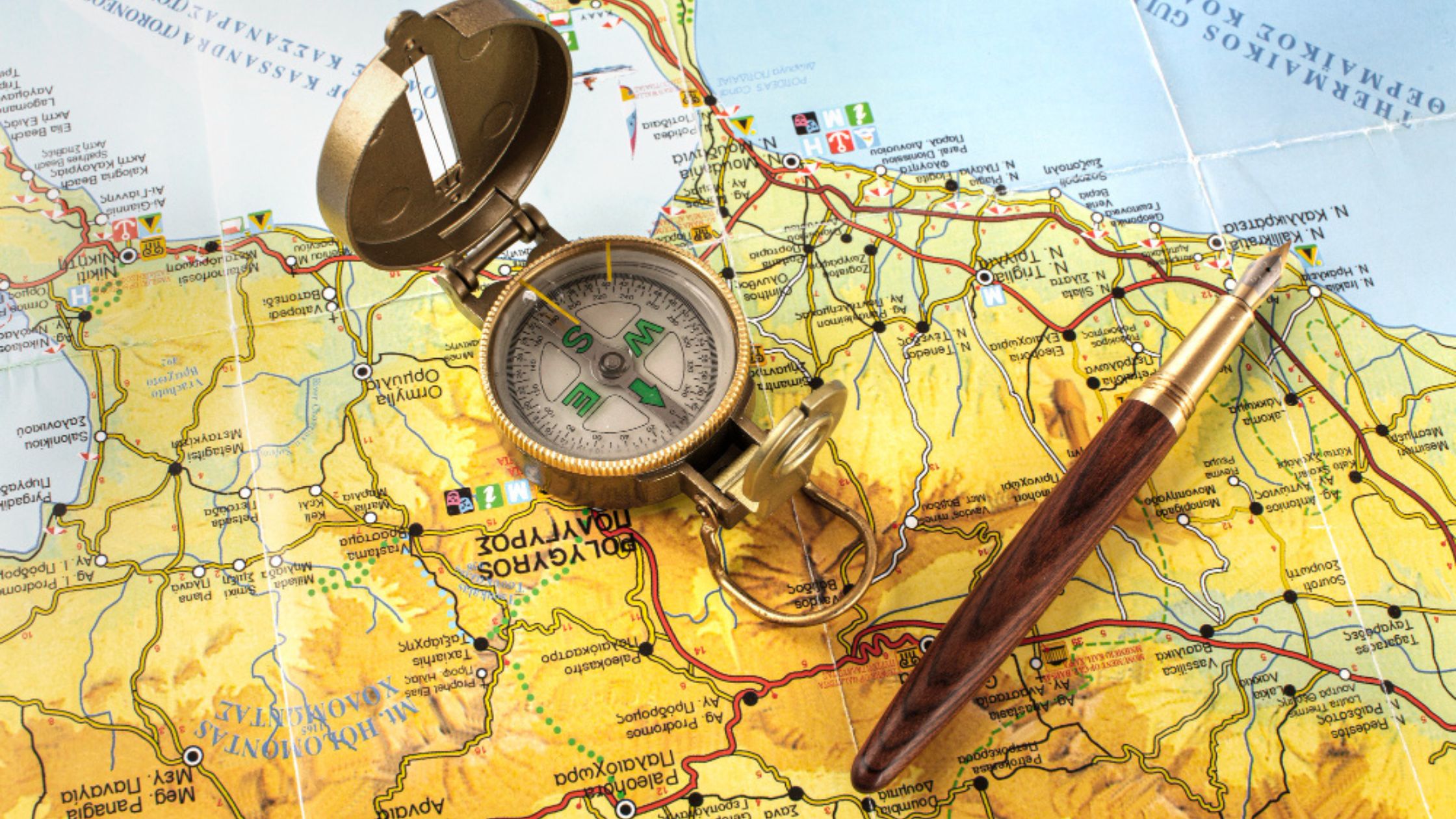
Geographical questions with answers assist learners in learning about the world systematically. Geography describes the physical features, climate, nations, and human activities. Geography questions are usually practiced by students to enhance memory and analytical skills. Confidence is also developed during quizzes and exams because of clear answers.
Geography relates physical environments to human life. It describes the impact of mountains, rivers, and climate on societies. Students learn more about global patterns when they go through typical geography questions. This will simplify the process of exam preparation.
Why Geography Knowledge Matters
Geography is the study of the way the earth works and the way man interacts with it. Students get to know about continents, oceans and ecosystems. This knowledge improves awareness of environmental issues. It also enhances general knowledge applied in academic tests.
Geography is a part of many competitive exams. Questions usually challenge map knowledge, climate knowledge, and location recognition. Regular practice makes students identify patterns fast.
Critical thinking is also enhanced by learning geography. Students make comparisons of regions, climates and population trends. They discover why certain locations develop differently.
Basic Geography Questions Students Often Face
Introductory geography questions are usually found in school examinations. These questions are questions of basic knowledge on the planet.
Examples include:
- What is the biggest continent on earth?
- What is the longest river in the world?
- Which desert is the largest hot desert?
- What is the most populated country?
- What is the capital in Australia?
These questions might appear easy. Nevertheless, they develop good geographical knowledge. They are used by teachers to assess knowledge about places in the world.
Practice makes one faster in recalling things in a test. Students are taught to relate countries, landmarks and natural features in a short time.
Physical Geography Questions and Answers
Physical geography deals with the natural characteristics of the Earth. These are mountains, rivers, climate and oceans. The category questions evaluate knowledge of natural processes.
The following are some examples:
- Question: What is the highest mountain in the world?
- Answer: Mount Everest is the highest mountain above sea level.
- Question: What is the largest ocean?
- Answer: Which is the largest ocean? Pacific Ocean.
- Question: What is the name of the river flowing through Egypt?
- Answer: The Nile River passes through Egypt.
- Question: What are the causes of earthquakes?
- Answer: Earthquakes are caused by the movement of tectonic plates.
The questions assist the students in knowing the structure of the Earth as well as natural forces.
Human Geography Questions and Answers
Human geography is the study of the interaction of people with the environment. It is concerned with cities, cultures and economic activities.
Some examples include:
- Question: What is the most populous country?
- Answer: China is one of the most populous countries in the world.
- Question: What is urbanization?
- Answer: Urbanization refers to the growth of the population in cities.
- Question: What is migration?
- Answer: Migration refers to the movement of people.
- Question: What is the most populous continent?
- Answer: Asia is the most populous continent.
These questions assist students in comprehending social and cultural geography.
Map-Based Geography Questions
Map questions appear frequently in school and competitive exams. They require students to identify locations and directions.
Typical map questions include:
- Identify the location of the Sahara Desert.
- Locate the Amazon River on a world map.
- Identify countries bordering the Mediterranean Sea.
- Find the equator line on a globe.
Practicing map skills improves spatial understanding. Students learn directions, coordinates, and geographic regions.
Teachers also use maps to explain climate zones and trade routes. This approach makes learning visual and memorable.
Advanced Geography Questions and Answers
Advanced geography questions refer to questions that demand the critical thinking of students in regard to the systems of the earth and human interactions.
These questions do not just stop at mere knowledge but go further to patterns, causes and consequences. Complex questions are being practiced to train learners to compete in exams and academic projects.
Examples of advanced topics are plate tectonics, population density, global trade routes, and climate change. The knowledge of these helps the students to connect physical geography with human activities.
- Question: What is the Ring of fire?
- Answer: The Ring of Fire is an area in which earthquakes and volcano eruptions are common in the Pacific Ocean.
- Question: What is the most densely populated country?
- Answer: Bangladesh is a densely populated country.
- Question: What is the distinction between weather and climate?
- Answer: Weather is the short run conditions and climate is the long run patterns of the atmosphere.
- Question: Name three renewable resources?
- Answer: Solar energy, wind energy and hydropower are re-newable resources.
Climate and Environment Questions
Climate geography is the science of weather patterns and the environmental systems. These questions assist the students in learning about differences in global climate.
Common examples include:
- Question: What causes seasons on Earth?
- Answer: Seasons on the earth are due to the tilt and rotation around the sun.
- Question: What is the greenhouse effect?
- Answer: It absorbs heat in the atmosphere, and heats the earth.
- Question: What is the climate zone that is close to the equator?
- Answer: The tropical climate zone is located close to the equator.
The knowledge of these concepts enhances awareness of the environment.
Common Mistakes to Avoid in Geography Exams
Students tend to commit simple errors that lower the scores in exams. Consciousness prevents mistakes.
- Mistaking nations and cities.
- Confusion of continents on a map.
- Mixing rivers and mountain ranges.
- Disregarding climate zones or natural features.
- Ignoring the recent geopolitical developments.
These errors can be prevented only through practice and revision. Short and frequent study sessions are more effective than long and irregular study sessions.
There are also resources that students can use to take my exam for me to guide them in case they are struggling. This assistance does not substitute independent learning but supplements regular study routines.
Tips to Prepare for Geography Exams
Students tend to have problems with memorizing geographic information. Nevertheless, basic study skills enhance performance.
Helpful strategies include:
- Study maps regularly.
- Complete short geography quizzes.
- Prepare flashcards on countries and capitals.
- View documentaries on world regions.
- Learn places using atlases.
These methods enhance memory and confidence in exams.
Students sometimes seek academic help. Websites that provide do my exam for me services guide learners during challenging exam preparation phases.
Nevertheless, self-study is significant. Knowledge is always enhanced in the long run by understanding concepts.
Practice Questions for Self-Testing
Practice questions help students measure their knowledge level. Try answering these questions without checking references.
- What is the smallest continent?
- Which river runs through London?
- What is the capital city of Canada?
- Which ocean lies between Africa and Australia?
- What line divides the Earth into northern and southern hemispheres?
Regular practice helps students to perform better in tests. Coherence assists in building better recall skills.
There are even learners who seek academic assistance services such as take my exam for me in handling several subjects. Nevertheless, independent practice of questions enhances mastery of the subject.
Significance of Revising Geographical Questions With Answers
Reviewing geographical questions with answers improves both knowledge and exam readiness. Students become acquainted with patterns of exams. They also acquire quicker problem-solving skills.
Geography questions tend to be a mixture of both factual and analytical. As an example, students can name places and discuss environmental impact.
Educators promote rehearsal prior to tests. Brief daily review meetings enhance retention to a great degree.
Students that keep on revising questions also create greater global awareness.
How to Master Geography Efficiently
Learning geography involves a combination of learning concepts, learning questions, and learning visually. Key strategies include:
- Daily mapping: Find countries, rivers, mountains, and deserts.
- Play flashcards: Learn capitals, countries and climates effectively.
- Quiz yourself: No references, answer questions.
- Link concepts: Connect climate, population, and economy for a better understanding.
- Discussions: Discuss world issues to enhance memory.
When geographical questions with answers are practised and reviewed on a regular basis, long-term success is realised. Students gain confidence and critical thinking, which is vital in examinations.
Geography is not all about the memorization of places. It fosters international knowledge, problem-solving skills and critical thinking. An integrated strategy will help students to deal with both factual and analytical questions.
Final Thoughts
Geography is not just about learning places. It describes the ways in which the Earth’s systems determine human life. Practicing geographical questions with answers helps students understand these relationships clearly.
Learning is supported by short quizzes, map exercises, and reviewing concepts. Students become more geographically knowledgeable over time. This information promotes academic achievement and international consciousness.
The most effective approach to learning geography topics is through regular practice. Regular learning also simplifies the process of exam preparation and makes it more efficient.